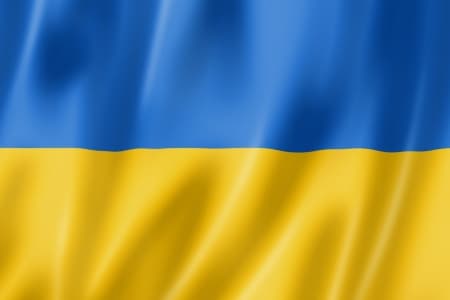
One year on: AmChams in Europe steadfast in support for the people of Ukraine

One year ago, Russia invaded Ukraine, violating international law, endangering peace and security across the region and causing unspeakable suffering. As the war rages on, AmChams in Europe – the umbrella organisation for 46 AmChams in 44 countries across Europe and Eurasia – continues to stand in solidarity with the people of Ukraine, as we have since 24 February 2022. Our thoughts remain with all those impacted, including our fellow AmCham colleagues, their members, partners and families.

News
23 Feb 2023
One year on: AmChams in Europe steadfast in support for the people of Ukraine

Our network brings together individuals and organisations with deep ties across Europe and Eurasia, and around the world. In the last year, our Chambers and member companies have used these connections to directly support relief efforts through a range of initiatives, including fundraising, collecting and distributing goods, and more. Many have also contributed to programmes welcoming those displaced by the war.

In the midst of the ongoing crisis, we applaud governments on both sides of the Atlantic for their unity and commitment to the people of Ukraine. The public and private sectors should be prepared to play an important role in supporting the country’s future economic prosperity and planning for its reconstruction. Ensuring respect for the rule of law will be critical to enable meaningful engagement from all stakeholders. In the face of the senseless loss of human lives, we must also continue to remain engaged and speak out for democratic values and the defence of human dignity.


Supporting AmChams: AmCham Albania, AmCham Austria, AmCham Azerbaijan, AmCham Belgium, AmCham Bosnia and Herzegovina, AmCham Bulgaria, AmCham Croatia, AmCham Cyprus, AmCham Denmark, AmCham Estonia, AmCham EU, AmCham Finland, AmCham France, AmCham Georgia, AmCham Germany, AmCham Gibraltar, AmCham Greece, AmCham Hungary, AmCham Ireland, AmCham Israel, AmCham Italy, AmCham Kosovo, AmCham Latvia, AmCham Lithuania, AmCham Luxembourg, AmCham North Macedonia, AmCham Malta, AmCham Moldova, AmCham Montenegro, AmCham The Netherlands, AmCham Norway, AmCham Poland, AmCham Portugal, AmCham Romania, AmCham Serbia, AmCham Slovakia, AmCham Slovenia, AmCham Spain, AmCham Sweden, AmCham Switzerland, AmCham Turkey (ABFT), AmCham Turkey (TABA), AmCham Ukraine, AmCham UK.


AmChams in Europe serves as the umbrella organisation for 46 American Chambers of Commerce (AmChams) from 44 countries throughout Europe and Eurasia. In Europe, they represent the interests of more than 17,000 American and European companies employing 20 million workers and accounting for more than $1.1 trillion in investment on both sides of the Atlantic. As a bilateral voice of American and European companies, AmChams in Europe works to communicate the importance of the transatlantic economy in both Europe and the United States.

Related items

Position Paper
25 Sep 2026

Closing the gap between customs and VAT rules

The reform of the Union Customs Code changes who is treated as the ‘importer’ when a non-EU company uses an indirect customs representative. That creates a problem under the EU VAT Directive, which links import VAT deduction to being identified as the importer or consignee. In practice, the non-EU company may no longer meet that requirement, while the customs representative may not qualify for the deduction either.

That could leave import VAT irrecoverable and create uncertainty for businesses using established import models. The Commission should ensure that the non-EU principal can still be identified in customs data for VAT purposes and fix the mismatch between the UCC and the VAT Directive.

Learn more about what changes are needed to keep import VAT deductibility workable under the new customs framework.

Read more about Closing the gap between customs and VAT rules
Position Paper
24 Sep 2026

Gold-plating in practice

"Gold-plating" of EU legislation has become a structural challenge for companies operating across the Single Market. While Member States are often permitted to introduce additional national measures when implementing EU law, these divergences frequently create fragmented compliance requirements, administrative burdens and increased costs for businesses.

Drawing on examples from AmCham EU member companies across digital policy, cybersecurity, data protection, telecommunications, environmental regulation, consumer protection, tax transparency and labour law, the paper shows how national additions to EU rules can result in parallel compliance systems, duplicate reporting obligations, country-specific product adaptations and barriers to cross-border operations.

The paper highlights four key findings:

  • Divergence between Member States is often a bigger cost driver than any single regulatory requirement.

  • Fragmentation extends beyond directive transposition and also arises through opening clauses, national guidance, administrative practices and regional measures.

  • Minimum-harmonisation legislation can still create significant Single Market fragmentation.

  • Gold-plating occurs at both national and sub-national levels.

The European Commission should address these issues through greater consistency in implementation, increased transparency around national additions, reduced duplication in reporting and registration requirements, stronger implementation dialogue and the use of Single Market enforcement tools where appropriate. The objective is not to remove legitimate national discretion, but to prevent unnecessary regulatory barriers within the Single Market.

Simplification
Read more
Read more about Gold-plating in practice
News
23 Sep 2026

Europe in a new era of global competition

On Tuesday, 22 September, AmCham EU hosted Dragoș Tudorache, Member of the Cabinet of Executive Vice-President Stéphane Séjourné, European Commission, for a fireside chat. Moderated by Malte Lohan, CEO, AmCham EU, the conversation explored the growing role of economic security in Europe’s trade agenda and external relations. The exchange examined how this shift is shaping the EU’s engagement with trading partners and its position globally. Attention also turned to the choices facing Europe in a changing geo-strategic landscape, including how to reinforce resilience and strengthen competitiveness.

Industry
Simplification
Read more
Read more about Europe in a new era of global competition