US business in Europe cautions against potential EU-US trade tit-for-tat
News
2 Feb 2025
Transatlantic, Trade tensions

The US administration is moving forward with the implementation of 25% tariffs on Canada and Mexico and 10% on China. This decision has sparked concerns from the business community around the world. The US Chamber of Commerce has highlighted why these ‘unprecedented’ tariffs are not the answer to the problems the administration seeks to address as well as the associated economic risks (full statement).   

With potential measures against the EU under consideration, the American Chamber of Commerce to the European Union (AmCham EU) similarly opposes the introduction of tariffs. They would be hugely destabilising for the transatlantic economy and would inevitably invite damaging countermeasures from the EU. The impact on global supply chains would be significant, with companies on both sides of the Atlantic likely to suffer. This would not address global unfair trading practices. 

On Inauguration Day, President Trump took the right approach by ordering a review of US trade policy. The planned review should take into account the root causes behind trade imbalances, consult the parties most likely to be impacted and respect the rules of the international trading system.  

Tariffs not only lead to countermeasures but also lay the groundwork for protectionist policies more widely, including in the EU. This is not the way to foster economic growth or resilience. Instead, governments should seek to build the resilience of their supply chains through diversification and collaboration. The best way for the EU and the US to address common trade and security challenges is by working towards a pragmatic transatlantic agenda. At a time of global instability, the US should look to collaborate rather than erode trust with one of its staunchest allies. 
Related items

Publication
23 Oct 2026

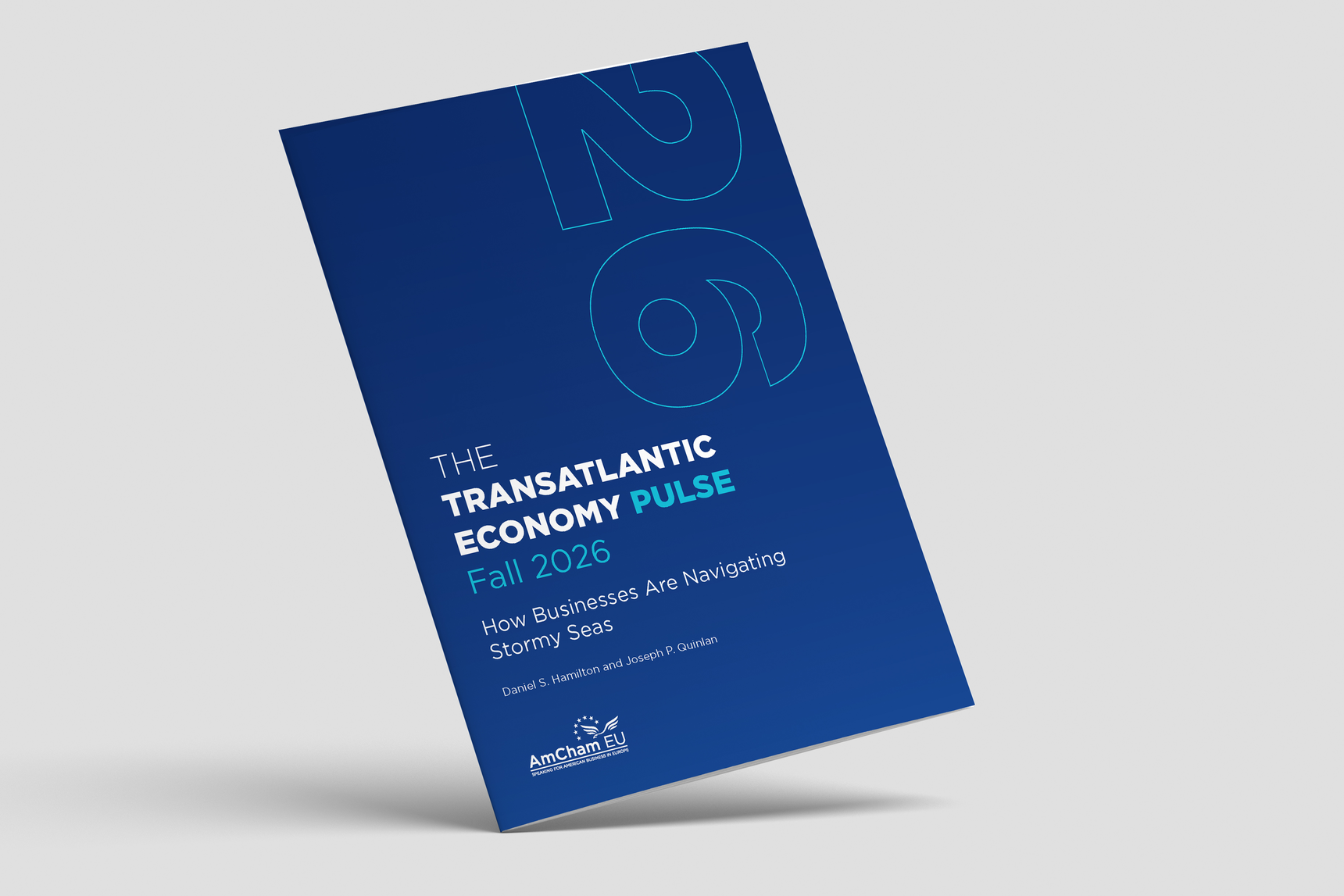
The Transatlantic Economy Pulse 2026

How are companies adjusting to an evolving transatlantic trade environment? In a year so far marked by geopolitical tensions and economic uncertainty, The Transatlantic Economy Pulse identifies trade and investment trends between Europe and the US in the first half of 2026.

Transatlantic
Read more
Read more about The Transatlantic Economy Pulse 2026
News
21 Oct 2026

Why stability and openness matter for transatlantic investment

On Wednesday, 21 October 2026, Thibaut L’Ortye, Chief Policy and Public Affairs Officer, AmCham EU, addressed MEPs with Brando Benifei, MEP (S&D, IT) and Chair, and Eva Maydell, MEP (EPP, BG) and Vice-Chair, European Parliament Delegation for relations with the United States. Taking place at the European Parliament in Strasbourg, France, he presented the latest trade and investment data alongside Daniel Hamilton, co-author of The Transatlantic Economy, stressing that behind the headlines lies the world’s most integrated economic relationship, worth around €8 trillion. He underlined that stability and predictability are essential, urging both sides to build on the Turnberry agreement. He also called for Europe’s industrial strategy to keep the Single Market open to investment. Read more in the latest Transatlantic Economy Pulse.

Transatlantic
Read more
Read more about Why stability and openness matter for transatlantic investment
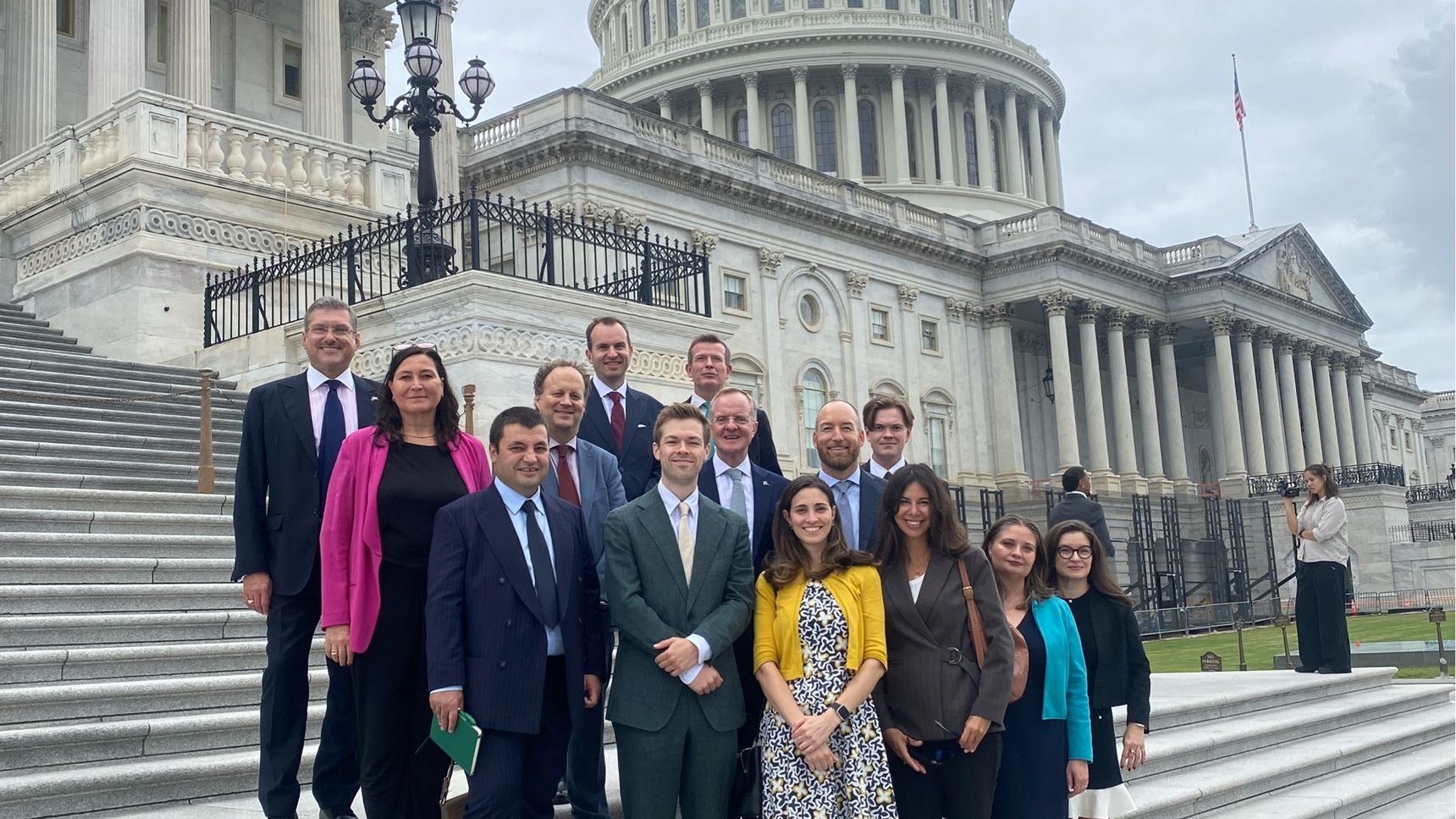
A group of people standing on the steps outside the US Capitol building under a cloudy sky.
News
5 Oct 2026

Making the case for the transatlantic relationship in Washington, DC

From Monday, 28 September to Thursday, 1 October 2026, AmCham EU led a delegation of members to Washington, DC to bring the views of the business community to policymakers in Congress and the administration. Discussions showed that both sides value the stability the Turnberry framework agreement brings. While parts of the agreement remain to be implemented, meetings pointed to the possibility for cooperation on economic security. Implementation will continue to need dialogue between the two sides, which is expected to carry on after the mid-term elections.

Transatlantic
Read more
Read more about Making the case for the transatlantic relationship in Washington, DC