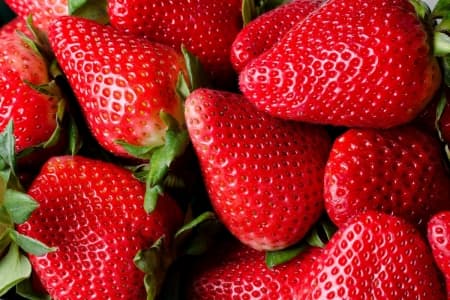
Protecting crops - and the environment

We need to protect our crops from fungal diseases. Gowan is developing natural solutions that contribute to reducing the use of chemical fungicides and boosting innovation.

Read how this family-owned company supports the targets of the EU Biodiversity Strategy. 

Learn more at The Green Way and join the conversation on Twitter with #EUGreenWay

News
4 Oct 2021
Agriculture and food , Environment
Protecting crops - and the environment

We need to protect our crops from fungal diseases. Gowan is developing natural solutions that contribute to reducing the use of chemical fungicides and boosting innovation.

Read how this family-owned company supports the targets of the EU Biodiversity Strategy. 

Learn more at The Green Way and join the conversation on Twitter with #EUGreenWay

Fungal diseases such as botrytis, or ‘grey mould’, have the potential to destroy crops of fruit and vegetables and cost farmers fortunes in lost crops, while driving up prices for consumers. In order to mitigate the risks posed by fungal disease, the application of fungicide has become common practice in crop management. However, the use of synthetic fungicides has become highly controversial in view of their potential impact on the environment and the residues they may leave on food produce. Public opinion shows concern about such agricultural practice and a low understanding of their benefits.

Sustainable growing with Gowan

Given the targets to increase organic farming and reduce the use of chemical fungicides in Europe laid out in the EU’s 2030 Biodiversity Strategy, Gowan – a crop protection solutions company – has made a concerted effort over the past decade towards grower solutions, environmental stewardship, and sustainability.

Working closely with its partner Ecoflora Agro in a joint venture, Gowan created a novel bio-fungicide extracted from Swinglea glutinosa, a shrub plant abundant in the countryside of Colombia. Noticing that Swinglea leaves manifested no sign of the fungal diseases that blighted other crops, researchers decided to investigate the possible reasons for the plant’s immunity. This led to the identification of the active ingredient responsible for the Swinglea plant’s fungicidal properties and the development, production and trial of the novel bio-fungicide which is now commercially available in Latin America and the USA under the trade name ECOSWING®.

Green fungicide coming soon to the EU

Gowan’s botanical extract has been recognised as the best new bio-fungicide product at the 2019 Global Biopesticide Awards, while also being touted as ‘one of the world’s best biopesticides’ by the prestigious Bernard Blum Award at the Annual Biocontrol Industry Meeting in Switzerland. The novel bio-fungicide has been submitted for registration in the EU under the trade name PERIMETER®. It will provide EU farmers with an effective natural solution that can help reduce the use of chemical fungicides to control grey mould diseases in vegetables and vineyards, and apple scab. For example, it is estimated that about 600,000 tons of synthetic fungicides are applied every year on European vineyards for controlling grey mould. Gowan believes that their new bio-fungicide could replace 10% of it.

Gowan’s novel bio-fungicide is a key step towards a growing green initiative of the company’s portfolio. This addition will help the European community reach the Green Deal’s objectives to reduce conventional pesticide use and support the lowering of pesticide residues in food.

About Gowan

Gowan is a family-owned company headquartered in Yuma, Arizona, whose presence in Europe has increased considerably in the last decade. The company’s core business is providing crop protection solutions to farmers focusing on niche crops and small farmers (ie, mostly for fruits and vegetables) commonly overlooked by the larger crop protection companies sometimes leaving these farmers without a solution.

Related items

News
29 Apr 2026

Revision of the Classification, Labelling and Packaging Regulation: Following a balanced Report, trilogues must secure simplification

Today, the European Parliament adopted its Omnibus VI report, including the revision of the Classification, Labelling and Packaging (CLP) Regulation, by 540 votes to 60. The outcome supports a more streamlined framework by easing the regulatory burden on value chains that rely on chemicals and sending a positive signal of the EU’s commitment to reducing unnecessary complexity.

With the Council’s position agreed in November 2025, the Parliament’s report marks the final step before trilogues, which will conclude negotiations on the targeted revision of the CLP Regulation.

The report largely aligns with the Commission’s simplification agenda and strengthens the CLP Regulation’s overall workability, especially with regards to:

  • Transition periods, setting 18 months following classification updates and allowing digital contact information to be updated on the label in line with suppliers’ regular update cycles. This better reflects supply chain realities.

  • Advertising and distance sales requirements, appropriately excluding business-to-business settings while ensuring consumers remain protected; and

  • Label legibility requirements, with more proportionate minimum font sizes and rules on background contrast, spacing and overall layout. However, further simplification is still needed to ensure sufficient flexibility for businesses.

While the report represents a constructive step forward, trilogues should address remaining constraints and clarify language that is currently difficult to interpret, including further simplification on font sizes and advertising requirements in business-to-consumer settings. These negotiations should draw on the more proportionate approaches of the Commission and the Council.

Maintaining a strong focus on simplification will be key to further alleviating administrative burdens and strengthening the EU’s resilience and competitiveness.

Environment
Read more
Read more about Revision of the Classification, Labelling and Packaging Regulation: Following a balanced Report, trilogues must secure simplification
Position Paper
29 Apr 2026

Simplifying the Classification, Labelling and Packaging Regulation: recommendations for trilogues

On 8 July 2025, the Commission presented the Omnibus VI simplification package, reopening key legislation such as the CLP Regulation, which entered into force in December 2024. The Omnibus addresses overlaps and inconsistencies that create practical challenges and, in some cases, make compliance unworkable.


Upcoming trilogues can streamline the framework and reduce unnecessary burdens. This paper sets out targeted recommendations on the positions that can achieve meaningful simplification during the inter-institutional negotiations.

Environment
Read more
Read more about Simplifying the Classification, Labelling and Packaging Regulation: recommendations for trilogues
News
20 Apr 2026

Discussing environment policy priorities with policymakers in Finland

From Monday, 13 to Wednesday, 15 April, AmCham EU travelled to Helsinki for a series of meetings with Finnish stakeholders on the future of EU environment policy. In discussions with representatives from the Finnish Ministry of Economic Affairs and Employment, the Ministry of the Environment, the European Chemicals Agency and Members of the Finnish Parliament, the delegation examined how the EU can pursue its environmental objectives and support competitiveness by delivering long-term simplification in environmental policies.

Across the meetings, one theme was evident. Europe’s environmental legislation must be more coherent and efficient across the Single Market. Members emphasised that simplification is not about lowering standards, but about avoiding unnecessary complexity while preserving a high level of environmental and human health protection and building the business case for investment in sustainable frameworks such as Circular Economy. As the EU takes forward its next environment policy initiatives, the priority should be a framework that combines ambition with legal certainty, supports investment and delivers practical outcomes across Europe.

Environment
Read more
Read more about Discussing environment policy priorities with policymakers in Finland