High-level transatlantic dialogue with the cabinet of President von der Leyen
On Friday, 3 February, the AmCham EU Board of Directors met for the first time in 2023, meeting with Tomas Baert, Trade Adviser, Cabinet of President Ursula von der Leyen, European Commission. The discussion was timely and wide-ranging, touching on pressing issues including the EU's response to the Inflation Reduction Act, the war in Ukraine, European economic resilience and competitiveness and the outlook for the transatlantic relationship in 2023. Conversations like these are what keep the transatlantic relationship strong in the face of shared challenges.

Related items

Industry calls for ambitious tax simplification
AmCham EU has joined 22 other business, financial and professional associations in calling on Member States to reach agreement on the Commission’s Tax Simplification Package. The measures could save European businesses around €8 billion a year, money currently absorbed by complexity rather than invested in growth. Tax collected only to be refunded and withholding taxes that hinder investment in the Single Market add costs without strengthening the tax base. Europe has already strengthened its tax framework, so simplification can go ahead without weakening enforcement. Agreement will only matter if the ambition of the package survives the negotiations. Read the full joint statement here.
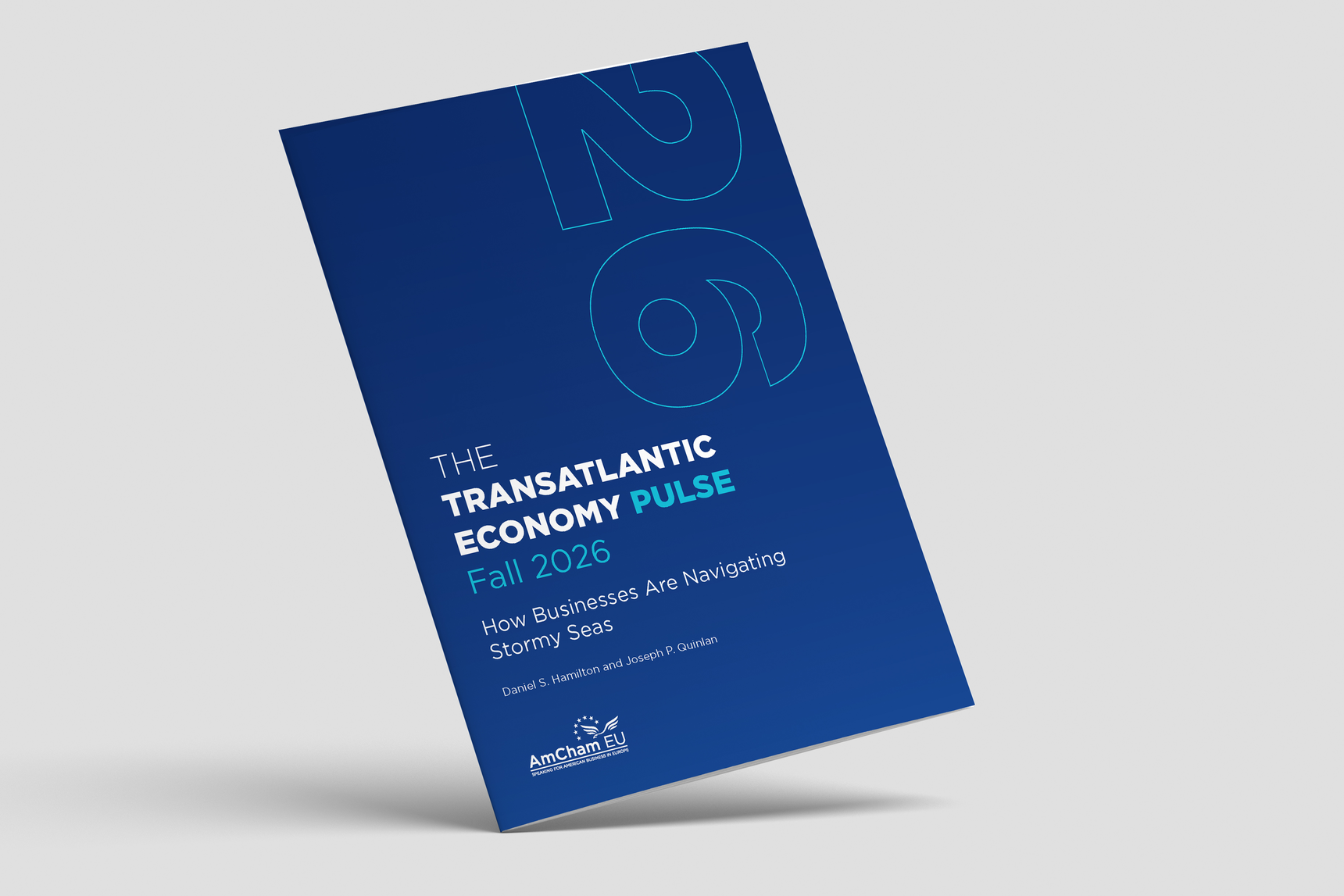
The Transatlantic Economy Pulse 2026
How are companies adjusting to an evolving transatlantic trade environment? In a year so far marked by geopolitical tensions and economic uncertainty, The Transatlantic Economy Pulse identifies trade and investment trends between Europe and the US in the first half of 2026.
Industry calls for repeal of the SCIP database
AmCham EU has joined over 30 industry associations in calling on EU co-legislators to confirm the repeal of the Substances of Concern In articles as such or in complex objects (Products) (SCIP) database, as proposed in the Environmental Omnibus. SCIP costs companies around €225 million a year, yet its intended users, recyclers, barely use it. The Commission itself acknowledges that waste operators find the data unusable and most companies lack the resources to maintain millions of notifications. Repeal would remove a disproportionate reporting layer while keeping obligations for suppliers to inform customers about substances of very high concern. Any future approach should build on existing obligations, not add new ones.
Policy priorities
Insights and advocacy driving Europe’s policy agenda. Our priorities support growth, innovation and a stronger transatlantic economy.
Membership
Connecting business and policymakers to strengthen the voice of American companies in Europe.